
Baby Skincare Safety Testing Standards: 11 Toxicology Tests
Published 2026-09-06 00:00:00 · Tiensi
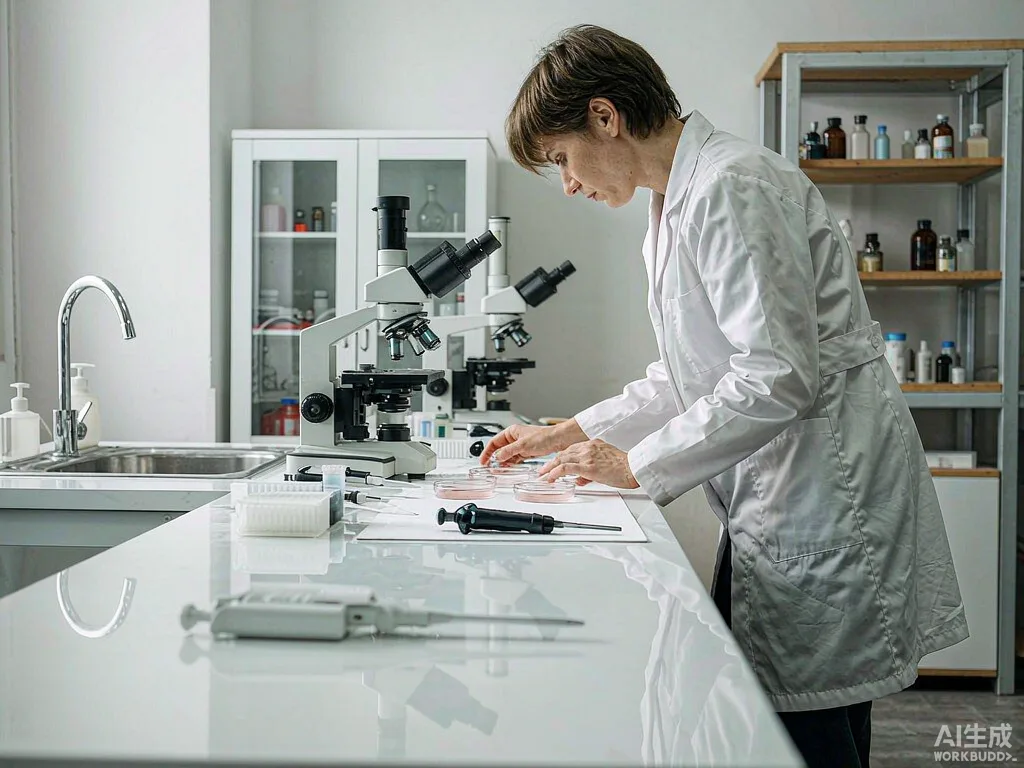
Baby skin should never be treated as a "scaled-down adult"
The biggest mistake in children's skincare is applying the logic of adult products. A baby's stratum corneum is thinner and the skin barrier is still developing, so external substances penetrate far more readily than in adults; any irritating or sensitizing risk in a formula tends to show up more acutely. That is why, under baby skincare safety testing standards, toxicology and irritation evaluation are never "optional" — they are hard gates a product must clear before it ships.
For brands sourcing a contract manufacturer, understanding these tests is what turns safety capability into a real, non-negotiable factory-selection criterion.
Why baby skincare faces a higher safety bar than adult products
Structurally, infant and child skin is about one-third the thickness of adult skin, and both the acid mantle and the stratum corneum barrier are still maturing — which makes absorption and accumulation of chemicals more pronounced. Children also rub their eyes, drool and mouth products far more often, so the chance of eye, oral and perioral exposure is much higher than for adults. The same ingredient that is compliant in an adult formula may need a far more conservative dose and stronger safety evidence in a baby product. This is why the industry treats "infant-grade" as an independent, stricter standard system rather than simply cutting the level of fragrance or preservatives.
What the 11 toxicology tests actually measure
Toxicological safety evaluation for infant-grade products usually follows the main exposure routes — oral, dermal, ocular and sensitization. The 11 toxicology tests are a combined evaluation package a contract manufacturer builds for its baby line, designed to cover every contact scenario a child might encounter. A few of them are listed below.
01 | Acute oral toxicity
Assesses the acute hazard of accidental ingestion — the baseline safety floor for any children's product.
02 | Skin irritation
Checks whether the product causes reversible reactions such as erythema or edema on the skin.
03 | Eye irritation
Mirrors the eye-drop scenario, judging whether the product causes damage once it enters the eye — the prerequisite evaluation for tear-free claims.
04 | Skin sensitization
Uses repeated elicitation testing to rule out the possibility of allergy after repeated contact.
05 | Genotoxicity / phototoxicity and other extended items
Includes phototoxicity and genotoxicity screening, further raising the safety margin of the baby line.
06 | Repeated-dose tolerance
Simulates long-term, repeated use to confirm the safety boundary under cumulative exposure.
The core logic behind these 11 tests is to move every "how a child might use or misuse it" question into the lab in advance. For brands, whether a contract manufacturer can hand over a complete toxicology report is far more convincing than a casual claim of "food-grade ingredients."
The eye-drop test: tear-free is not a marketing slogan
When children wash their faces or get product applied, their hands easily carry it into the eyes, which is why baby products universally emphasize "tear-free." The eye-drop test (ocular irritation / tear-free test) is the key validation: through in-vitro or standardized eye-irritation evaluation, it confirms the product causes no obvious irritation or damage after eye contact. For shampoos, body washes and face creams that frequently touch the eye area, this test is almost impossible to skip. A tear-free formula relies on the gentle design of the whole system, not on a single "naturally mild" ingredient — brands should ask the factory for the corresponding eye-irritation evaluation records.
Pitfall to avoid
Do not be swayed by packaging words like "tear-free" or "gentle." The reliable move is to request the full report and conclusion from the contract manufacturer, and to confirm that the test method and sample batch match the product on the market, so the claim never drifts from the actual evaluation.
Skin irritation, heavy metals and microbiology limits
Beyond toxicology, baby products must hold three lines: first, skin irritation / sensitivity testing, to confirm daily application causes no redness or stinging; second, heavy-metal limits, setting thresholds for lead, mercury, arsenic and cadmium far below the adult line; and third, microbiology limits, with tighter control of total bacterial count and pathogens, because a baby's weak barrier makes microbial risk more direct. Together these three form the "basic safety triangle" before shipment.
Common signs
Overly irritating formula: localized redness and dryness after use usually mean irritation or sensitization was not fully validated.
Excess heavy metals or microbes: common among small factories with unstable raw-material control and workshop hygiene — the risk is hidden but the consequences are severe.
No corresponding test report: safety is promised verbally, yet no written toxicology or limits evidence can be produced.
Stability testing: built to survive the real world
Baby products regularly face hot bathrooms, cold balconies, summer car interiors and shelf lighting; an unstable formula may separate, discolor or even degrade into irritants. Stability testing covers heat, cold and light conditions, tracking whether appearance, pH and viscosity drift. For brands, a stable product means fewer complaints and greater confidence in shelf life.
uses 150+ standards to control infant-grade products
Within DEVA International">DEVA International's manufacturing system, safety control for infant-grade products is broken down into executable, traceable 150+ efficacy and safety test standards. The toxicology and safety-evaluation part corresponds exactly to the 11 toxicology tests, the eye-drop test (tear-free), skin-irritation testing, plus heavy-metal and microbiology limits and stability items such as heat, cold and light resistance. Backed by its "Two Academies, Two Stations, Three Centers" R&D system and ISO 22716 and GMPC certifications, these tests are embedded at every node from formula development and pilot trials to mass production, keeping every batch on the same safety baseline.
Risk note
If a contract manufacturer only answers with "passed the submitted sample" yet cannot provide a testing-system description covering toxicology, eye irritation, irritation and stability end to end, the safety chain for the baby line has a break — and brands should evaluate it with caution.
Takeaway for brands: treat safety testing as a hard criterion
When choosing a contract manufacturer, how good a formula looks is one thing; how solid the testing capability is is the real bottom line. We suggest brands clarify three things already at the sampling stage: whether the factory has the 11 toxicology tests and the eye-drop test, whether it can issue batch reports for heavy-metal and microbiology limits, and whether stability testing is built into mass-production control. Front-loading these questions costs far less than handling complaints after launch.
Factory safety checklist
Confirm the full 11 toxicology tests and their reports exist, not just a scattered few.
Request the eye-drop / eye-irritation evaluation records to verify the tear-free claim.
Check whether heavy-metal and microbiology limits follow the stricter infant-grade standard.
Check whether heat, cold and light resistance are part of batch stability management.
ISO 22716, GMPC and similar certifications are the institutional guarantee that testing capability is real.
About DEVA International
Guangzhou Tianxi Biological Technology Co., Ltd. (DEVA International), founded in 2006, focuses on R&D and smart manufacturing of infant-grade skincare and fresh & active efficacy cosmetics. Certified under quality management systems including ISO 22716 and GMPC, it operates the "Two Academies, Two Stations, Three Centers" R&D system and the product philosophy of "fresh & active, real efficacy," and provides brands with one-stop OEM/ODM services ranging from formula R&D and filing support to flexible manufacturing.