
Sun Care Trends 2026: Better Textures, Green Formulas and Chinese Ingredients
Published 2026-10-14 15:54:56 · Tiensi
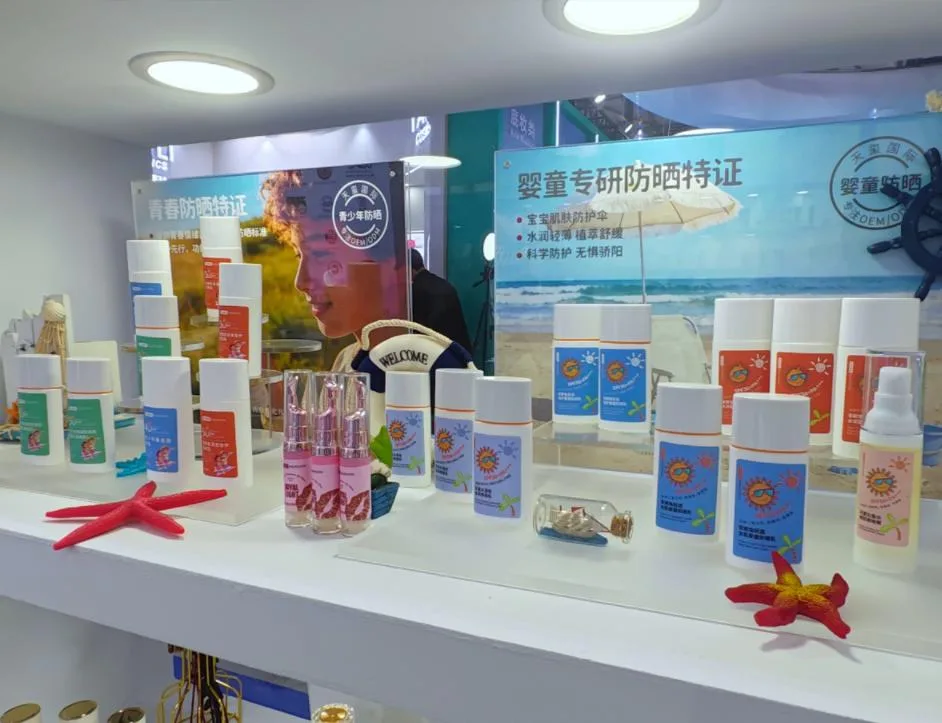
I. Skin Feel Upgrade: From "It Protects" to "I Will Wear It Every Day"
Sun protection has long been trapped in a triangle of protection, skin feel and safety — higher SPF often means greasiness and a white cast. In 2026, skin feel has become the most contested frontier, and brands are focusing on three specific pain points.
No White Cast: Hybrid Systems Suppress the Fake-White Effect
Physical filters rely on particle size control and dispersion optimisation to keep the white cast minimal; more products are moving to organic-inorganic hybrid systems that maintain full-spectrum protection while looking more natural on skin. For commuters, "you cannot tell I put it on" is becoming the baseline expectation.
Not Greasy: Mousses and Gels Take Away the Oily Feel
Silicone suspension technology, waterless minimal formulas and continuous-phase structure innovation now let high protection coexist with a light texture. Sun protection mousses promise a feel like velvet, a texture that melts like dew and a finish like mist; gels go for "thin as water, steady as a shield". This formulation revolution is redrawing the boundaries of what good skin feel means.
Skin-Caring Formats: From Defence to Daytime Skincare
Antioxidants (vitamin C, vitamin E), soothing agents (bisabolol, dipotassium glycyrrhizinate) and anti-ageing actives (peptides, ergothioneine) are being built into formulas, making "sunscreen plus brightening" and "sunscreen plus repair" standard. One consumer survey found that 68.3% of consumers rank long-term skin-caring value as the second decision factor after protection, and 78.1% expect post-exposure repair benefits.
II. Green Sun Protection: Putting the Environmental Cost Into the Formula
Once sun protection moves from seasonal use to high-frequency year-round use, a product's environmental footprint can no longer be avoided. Green sun protection is no longer a bonus but a question every brand must answer.
Regulators moved first. Between 2025 and 2026 the National Institutes for Food and Drug Control and the NMPA introduced new rules banning 4-methylbenzylidene camphor and lowering permitted concentrations of filters such as benzophenone-3, accelerating the industry's shift toward safety and compliance and accelerating the shakeout of smaller brands.
Ocean-friendly. Oxybenzone, part of the benzophenone family, is toxic to coral and has been restricted in several tourist regions. Leading manufacturers are now building internal green screening lists that go beyond legal requirements, prioritising coral-safe, biodegradable filters to build ocean-friendly sunscreens for beach and water-sports scenarios.
Technical direction. Large-molecule filters with a molecular weight above 700 Da, such as ethylhexyl triazone, do not readily penetrate the skin and are seen as a key route to resolving safety concerns; biotechnology-derived filters such as mycosporine-like amino acids (MAAs) cost more but represent the green, sustainable direction. Microplastics entering the ocean and non-degradable packaging are also pushing formulators toward biodegradable formulas and low-carbon processes.
III. The Rise of Chinese Ingredients: Domestic Botanicals and Local Technology
For a long time, filter raw materials relied heavily on imports, and supply chokepoints were amplified by shifts in the global landscape. In 2026, Chinese ingredients moved from marketing slogans into real formulas, and they did so on two legs: domestic botanical raw materials plus locally developed formulation technology.
Take the rare plant resources of Shennongjia at 31 degrees north as an example. Companies are now extracting distinctive botanicals such as Shennong chrysanthemum, gromwell and milk thistle to build natural blended protection systems — using plants' own photoprotective mechanisms to replace part of the chemical filters, reducing chemical residue and environmental load at the source while covering UVA, UVB, blue light and infrared together. Original compositions of this kind have already secured invention patents and bind sun protection closely with anti-ageing and firming benefits.
On technology, local brands are no longer only following. Microencapsulation, targeted transdermal delivery, silicone suspension systems and waterless mousse and gel formats let protection and a pleasant skin feel coexist in one formula. Brands looking to differentiate should pay particular attention to cosmetics ODM partners with sun protection special registration capability, which turns Chinese ingredients into market-ready products quickly.
IV. Consumer Preferences Have Shifted: Who Buys, and Why
In a survey of more than 1,000 consumers, the ranking of decision factors tells the story: efficacy 99.32% > skin feel 97.96% > ingredient safety 87% > word of mouth 86.91% > price 81.96% > brand 63%. Brand halo has clearly weakened; the product's own performance, experience and safety now decide the outcome.
- A younger, oil-sensitive-skewed customer base: the core group is women aged 18–40, with oily and combination skin over 60% and sensitive skin more than half; "light and non-greasy" tops skin feel demands at 72.1%.
- Pricing concentrates in the mid range: RMB 51–100 is the core interval for both volume and revenue, while consumers in the RMB 101–200 band show stronger willingness to pay for value.
- Scenario segmentation is accelerating: post-procedure, baby-and-child, sport and outdoor, and urban commuting each grow their own dedicated products, with full-spectrum protection, blue light defence and makeup-removal-free formulations as new selling points.
- Men and lower-tier cities are rising: the share of male consumers keeps climbing, and penetration in tier-3 cities and below is growing fast, becoming the main source of incremental growth.
V. Lessons for Brands and Manufacturers
When trends land in the business, they come down to four things:
1. Compliance is the ticket in. Sun protection is special cosmetics, and the special registration certificate is the baseline. Without it, no concept reaches the shelf.
2. Skin feel and skin care are the differentiators. Extend efficacy on a 1+N all-round base; one bottle that suits multiple skin types and scenarios is more competitive than chasing a high SPF number.
3. Green and sustainability are mandatory. Ocean-friendly formulas, biodegradability and low-carbon processes are already standard practice for leading brands, and a prerequisite for entering ASEAN markets.
4. Chinese ingredients build the moat. Domestic botanicals and local technology are moving from following to defining. Brands that want to move fast can work with a manufacturer holding both R&D capability and special registration credentials, turning trends into products on the shelf. See the Product Centre for more options.
FAQ: Common Questions on 2026 Sun Protection Trends
Q1: What is the core sun protection trend in 2026? A: Not a single selling point, but three main lines running in parallel — skin feel upgrade (skin-caring sunscreens with no white cast and no greasiness), green sun protection (ocean-friendly and biodegradable), and the rise of Chinese ingredients (domestic botanicals plus local technology).
Q2: What are green sun protection and ocean-friendly sun protection? A: Products that reduce environmental impact in both formula and packaging — for example removing oxybenzone-type filters that are toxic to coral, using biodegradable ingredients and adopting low-carbon processes, suitable for beach and water-sports scenarios.
Q3: Do skin-caring sunscreens really work? A: It depends on the ingredients and their concentrations. Adding antioxidant, soothing and barrier-supporting ingredients within compliant limits does bring added value, but brightening claims require a matching special registration certificate — stay alert to products that add trace amounts purely as a marketing hook.
Q4: Is there a wide gap between local sun protection technology and international brands? A: In formulation engineering, botanical raw materials and registered products, local manufacturers are already competitive on a level playing field, with particular advantages in niche scenarios and in original Chinese ingredients.
About DEVA INTERNATIONAL
Guangzhou DEVA Biotechnology Co., Ltd. has spent nearly 20 years on the R&D and manufacture of fresh-active efficacy cosmetics. It is a cosmetics ODM company holding special cosmetics registrations for sun protection and spot fading and brightening, with a "two institutes, two stations, three centres" research system and an Indonesia plant supporting BPOM and HALAL certification, providing brands with one-stop full-spectrum sun protection registration and overseas expansion services. Learn more at www.txodm.com
About DEVA INTERNATIONAL
Guangzhou DEVA Biotechnology Co., Ltd. has spent nearly 20 years on the R&D and manufacturing of "fresh-efficacy cosmetics", is a cosmetics ODM company qualified to manufacture under special cosmetics registration certificates for sun protection and brightening and spot reduction, runs a "Two Institutes, Two Stations, Three Centers" research system and operates an Indonesian plant (supporting BPOM and HALAL certification), and offers brands one-stop full-spectrum sun protection special-certificate manufacturing and market-entry support. Learn more: www.txodm.com