
2026 Baby Skincare Trends: Age, Scenario & Ingredient Focus
Published 2026-09-15 00:00:00 · Tiensi
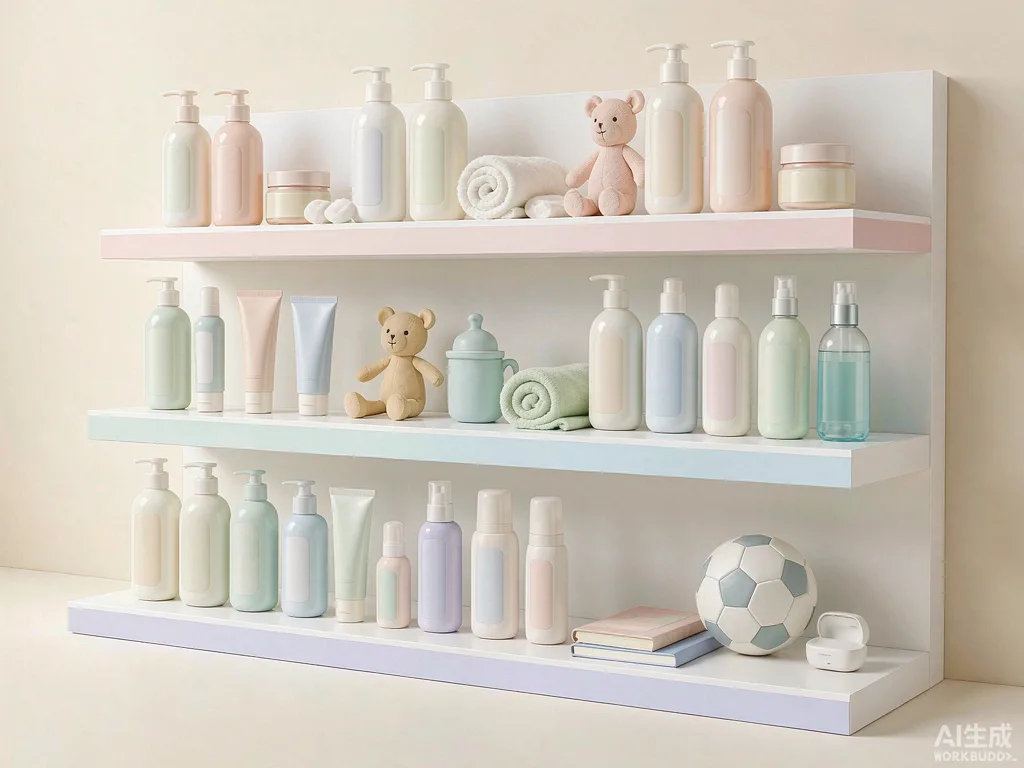
Introduction: For years, most families took a one-size-fits-all approach to children's skincare-"one cream for the whole body, one body wash for the year." But by 2026 that convenient shortcut is wearing thin. Industry data shows China's baby skincare market is set to surpass RMB 20.3 billion in 2026, with a steady 7%-8% CAGR; the faster growth sits in the finer categories-sunscreen, age-segmented efficacy and teen care. The real engines of growth are three keywords: age-segmentation, scenario-based use and ingredient precision. They are rewriting the product logic of baby skincare.
1. Why 2026 is a watershed
For the past decade, baby skincare was a "big and broad" business: one range covering 0-12, selling on gentle and non-irritating alone. The environment has changed. On one side, parents have turned "professional"-post-90s and post-00s mums and dads read ingredient lists, check studies and compare formulas; attention to "natural and additive-free" hits 93%, while safety tops purchase decisions at an absolute 84%. On the supply side, it has hit a red ocean: demand for basic selling points like baby, children, face cream and moisturising exceeds 46 million, yet homogenisation is severe and new brands struggle to break through.
So the category quietly changed its playbook. The blue ocean opened in "segmented efficacy + technical endorsement": selling points like sensitive skin, soothing and Chinese invention patents see strong demand but lagging supply, a clear gap. In other words, the underlying driver of 2026 baby skincare trends is consumers upgrading from "buying reassurance" to "buying the right fix"-whoever builds age-segmentation, scenario-based use and verifiable efficacy first captures the growth.
2. Keyword one: age-segmentation-one face, three plans
Age-segmentation is not a marketing line; it is dictated by physiological skin differences. An infant's stratum corneum is only about two-thirds an adult's, the barrier not yet formed; by school age, more outdoor time and rising sebum arrive; at puberty, hormonal swings bring oil and acne. Squeezing all three stages into one product inevitably favours one at the expense of others. The mainstream approach in 2026 is to design 0-18 in three stages.
0-3: immature barrier, stabilise before nourish
The core here is "basic hydration + gentle soothing." Formulas should be minimal, weakly acidic and tear-free, focused on nappy rash, "apple cheeks" and seasonal dryness. Parents' demand for "instant repair" is surging-discussion of tightness and fast results is up more than fourfold year on year. The product need not be aggressive, but it must feel trustworthy.
3-12: more outdoors, cleansing + protection together
Children start kindergarten, run in parks and go camping; skin exposure to UV and sweat-grime jumps. Demand shifts from "just moisturise" to "cleansing power + protection + soothing." Children's shampoo, sunscreen and face cream must balance outdoor protection with a light, easy-rinse feel that kids will actually use.
13+: puberty arrives, oil control and acne on the table
This is a seriously underestimated blue ocean. Teen personal care grew 108% year on year in 2025, far above the market. Acne control, oil control and fading acne marks are hard needs, yet parents and kids both fear side effects. Mild, acid-free, scientifically balanced "dermo-cosmetic" products win. Lines like Fruit & Olive for Teens, designed for 12+, hit exactly this gap.
3. Keyword two: scenario-based-from one universal bottle to one plan per scene
Parents' purchase decisions increasingly follow real-life scenes rather than promotional peaks. Sales growth at seasonal changes and outings now surpasses big-sale nodes. Four high-frequency scenes deserve their own slots.
Sunscreen scene
Sunscreen is 2026's brightest growth category; online children's sunscreen lotion/spray grew 53%-67%. Parents want "pre-sun prevention + post-sun repair" in one, ideally gentle enough for babies. Products holding a sunscreen license (tezheng) have a natural edge in compliance and professional trust.
Cleansing & care scene
"Face-grade body care" is lifting efficacy cleansing a notch. The shampoo-and-wash 2-in-1 remains the basic staple, but its social buzz is rising as parents want it to carry some repair power, not just get clean.
Eczema / sensitive care scene
At seasonal changes, eczema and redness are high-frequency pains; talk of repairing redness has more than tripled. These "symptom-care" products have strong repurchase and high trust stickiness-a key entry for differentiated breakout.
Outdoor scene
Camping, swimming and travel have spawned segmented categories like water-resistant, repellent and cooling. Multi-function outdoor protection is moving from optional to a family staple.
4. Keyword three: precision-ingredient-savvy parents force "verifiable efficacy"
Precision has two layers. First, ingredient transparency: 83.7% of parents treat "ingredient-list transparency" as the top decision factor, and actives like ceramide, prebiotics, squalane and centella asiatica have moved from a "natural botanical" story to a "science-enabled" story. Second, verifiable efficacy: parents no longer believe "said to work"-they want clinical, patent and visible proof. Medical-research co-creation and industry-academia fusion are becoming hard currency for lasting trust.
Pitfall to avoid: Don't turn "precision" into ingredient stacking. Parents study ingredients, but care more whether "this ingredient actually helps my child's red cheeks." A subtractive formula and evidenced claims beat stuffing in trendy actives. Also, children's cosmetics are bound by the Provisions on the Supervision and Administration of Children's Cosmetics; raw materials, formulas and safety assessment are stricter than for adults, and a license (tezheng) and the "little golden shield" mark are compliance baselines, not bonuses.
5. Where brands and factories find opportunity
For brands, opportunity lies on three lines: one, claim the age-segmentation gaps, especially the far-from-saturated 13+ teen line; two, replace single hero SKUs with a scenario-based product matrix, turning seasonal, outdoor and sunscreen-repair care into routine repurchase; three, build moats with licenses and clinical evidence to avoid the red-ocean churn of basic moisturisers.
For contract manufacturers, 2026 is a capability watershed. The new technical spec upgrades efficacy-claim verification from "non-special use" to "classified filing," washing out about a fifth of small OEM players. Survivors must hold reserves like license contract manufacturing (sunscreen, whitening & spot-removing), age-segmented formula libraries, and microencapsulation / targeted transdermal technologies, plus system credentials such as ISO 22716 and GMPC. Brands with export ambitions also check whether the factory can handle BPOM registration and HALAL certification to reach Southeast Asia.
Contract manufacturers like -a cosmetic ODM manufacturer with nearly 20 years in R&D and smart manufacturing of "fresh & active efficacy cosmetics"-have already built mature modules of infant-grade age-segmented ranges (0-3 / 3-12 / 13+), full-spectrum sunscreen-license lines and the Pure Peony series, so brands can assemble a compliant, differentiated line at low cost. For a systematic baby skincare product solution, their product center is a good reference.
6. FAQ: common questions on 2026 baby skincare trends
Q1: Is age-segmented skincare just a scam?
No. A 0-3 barrier is thin and 13+ sebum is abundant-the physiological differences are real. Age-segmentation is formulation logic, not packaging copy; what matters is whether the ingredients and feel truly fit the age group.
Q2: Is a licensed (tezheng) children's sunscreen necessary?
We recommend choosing products with a sunscreen license. A license means the product passed national registration for safety and efficacy, steadier for delicate skin and a hard endorsement of professional trust for the brand.
Q3: Do new brands still have a chance in 2026?
Yes, but don't crowd the basic face-cream red ocean. Niches with large supply-demand gaps-sensitive skin, soothing, teen acne and outdoor protection-remain room for smaller brands to break out.
Q4: How do you judge if a contract manufacturer is reliable?
Check three things: whether it holds sunscreen / whitening-spot license contract-manufacturing qualifications, whether it has age-segmented formulas and efficacy-verification capability, and whether its system certifications are complete (ISO 22716, GMPC). One that can take sunscreen-license contract manufacturing and export certification carries a higher, steadier bar.
About Tianxi International (DEVA International">DEVA International)
Guangzhou Tianxi Biological Technology Co., Ltd. has focused on R&D and smart manufacturing of "fresh & active efficacy cosmetics" for nearly 20 years, upholding the "fresh & active, real efficacy" philosophy. It holds a cosmetics production licence and special cosmetics registration certificates (licenses) for sunscreen and whitening & spot-removing, is certified under ISO 22716, GMPC and other systems, and offers brands ODM/OEM contract manufacturing in infant age-segmented skincare, full-spectrum sunscreen and pure beauty, with support for BPOM registration and HALAL certification at its Indonesia plant to aid Southeast Asia export. Learn more at www.txodm.com.