
Age-Segmented Child Skincare Guide: Needs at 0-3, 3-12 & 13+
Published 2026-09-01 00:00:00 · Tiensi
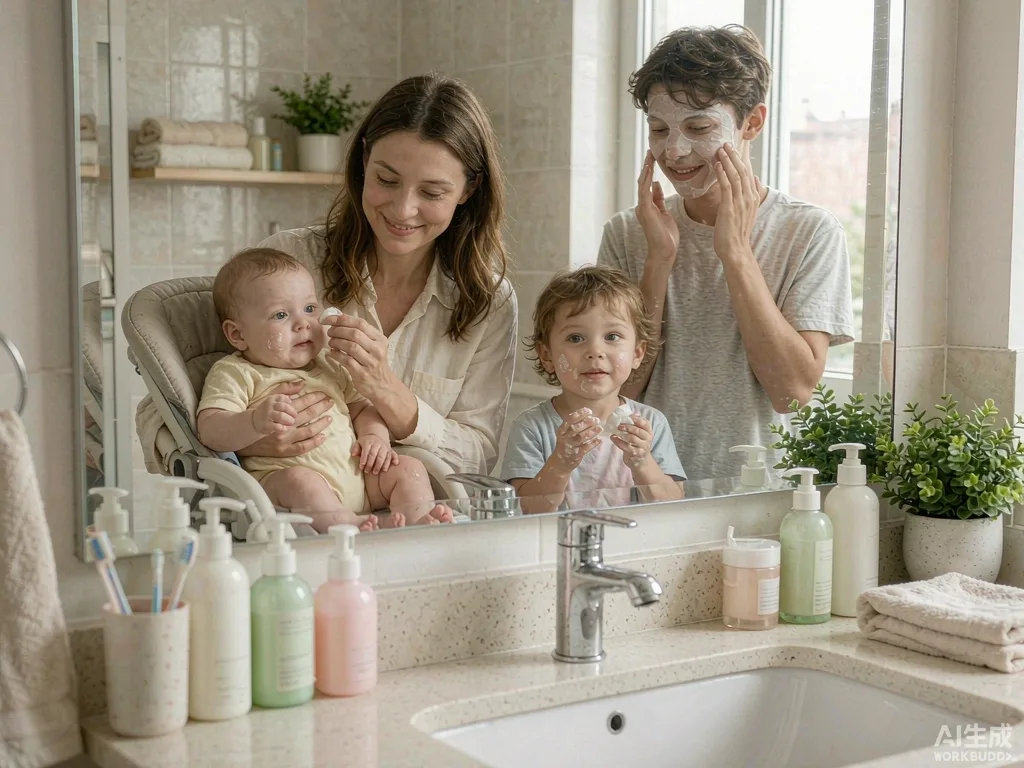
Using one product to the end may be quietly harming your child's skin
Many parents habitually use the same lotion from infancy to childhood, thinking "if babies can use it, older kids are even safer." But the broad dermatology consensus is: infant and child skin is not a scaled-down adult. From newborn to puberty, stratum corneum thickness, sebum and barrier function keep changing, and so should the care logic.
Age-segmented child skincare means matching products and usage to each stage's physiology. Get the age wrong and you either over-cleanse and damage the barrier or under-protect and leave gaps. Below we break down the three stages 0-3, 3-12 and 13+.
Why child skin can't be treated as a "scaled-down adult"
A baby's stratum corneum is about 30% thinner than an adult's, loses water faster, and the sebum film is underdeveloped, so defence against friction, temperature swings and chemical stimuli is weaker. As age grows, the barrier matures, but the first three years stay high-sensitivity; by school age, outdoor exposure to UV, dust and pool chlorine rises sharply; after 13, hormonal swings drive sebum and acne appears.
This also explains why "one bottle for the whole family" is both inefficient and risky: babies need repair and gentleness, school-age kids need light protection, teens need oil control and anti-acne. The three needs differ completely in texture, ingredients and efficacy direction-mixing them only favours one at another's expense.
0-3: fragile barrier period, care centres on hydration and repair
This stage has the thinnest, most delicate skin and fastest water loss; slight friction or environment change brings red, dry itch. Care should focus on gentle cleansing, frequent hydration and barrier repair, with ingredients subtracted and high-irritant additions like fragrance, alcohol and strong surfactants avoided. Bath water should not be too hot; apply lotion within three minutes after washing to "lock" water in.
Common 0-3 skin signs
Cheeks and limbs easily dry and flake, especially in autumn and winter.
Skin tightens and reddens if not moistured right after bathing.
Nappy area and skin folds easily break out in rashes and intertrigo.
Strange new wash products easily cause stinging, redness and intolerance.
On choice, prioritise fragrance-free, low-sensitivity, skin-irritation-tested infant-grade formulas. Lines like 's Pure Peony series-aimed at sensitive skin, mums-to-be and adult care with infant-grade standards-are gentle and uncluttered, fitting the 0-3 principle of "repair first, minimal skincare," and can serve as a formula-direction reference for this stage.
3-12: active outdoor period, light protection and soothing together
Kids enter kindergarten and primary school, run and sweat more, and exposure to outdoor UV, dust and pool chlorine jumps. Care should shift from "simple hydration" to "light protection + post-exercise soothing"; pick light, fast-absorbing lotions or emulsions that add water without clogging. Clean sweat promptly after exercise, then reapply a soothing moisturiser-a daily, workable combo.
Pitfall to avoid
Don't keep the baby-era heavy creams. School-age kids sweat a lot; heavy, high-occlusion products clog pores. Sunscreen should be child-suitable and low-sensitivity, reapplied about every two hours outdoors and cleansed promptly after home to avoid residue irritation.
For this outdoor scenario, DEVA's chia seed series is built around 3-12, balancing a light feel with outdoor protection needs. For brands, clearly marking the applicable age and scenario lets parents pick right off the shelf and eases after-sales queries.
Light texture
Light lotion/emulsion formulas absorb fast, non-sticky, suiting sweaty school-age kids.
Gentle protection
Low-sensitivity sunscreen and soothing actives together cut irritation from outdoor UV and pollution.
13+: puberty arrives, oil control and anti-acne are key
Puberty hormones drive sebum up; T-zone oil, blackheads and acne become the main conflict. Care shifts to moderate cleansing, oil control and anti-acne, while keeping basic hydration-avoid "washing the face raw to remove oil," since over-cleansing breaks the barrier and triggers compensatory sebum, a wash-more-oily loop.
Common 13+ skin signs
Clear T-zone shine; forehead and nose wings easily grow closed comedones and blackheads.
Acne worsens after exercise or late nights.
Poor care easily brings oily-outside, dry-inside and local peeling.
Poor tolerance of adult "strong anti-acne" products; easy barrier damage.
This stage needs "teen-exclusive," not "adult downgrade." DEVA's Fruit & Olive for Teens series targets ages 12+, adapted for puberty oil and acne, gentle and non-irritating, closer to teens' actual tolerance.
Insight for brands: how age-segmented lines lift repurchase
For brands, age-segmentation is not a marketing line but real demand layering. Pain points, texture preferences and purchase decision-makers differ by age: 0-3 is parent-led and safety-focused; 3-12 cares about outdoor protection; 13+ kids start forming their own preferences and focus on oil control and anti-acne. Designing lines by age hits needs more precisely and builds continuous purchase as the child grows.
Four values of age-segmented lines
0-3 needs repair, 3-12 needs protection, 13+ needs oil control-single products rarely cover every stage.
A matrix from infant to teen lets users upgrade naturally with the child's age, driving continuous repurchase.
Clear age labels let parents pick right quickly, easing choice anxiety and returns.
Scientific age-segmentation shows R&D strength, helping channel partnership and long-term word of mouth.
DEVA International already has a mature layout in age-segmented R&D: the chia seed series for the 3-12 outdoor scenario, the Fruit & Olive for Teens series for teens 12+, the Pure Peony series covering sensitive skin and mums-to-be with infant-grade care, backed by infant-grade safety tests like 11 toxicology and tear-drop. Brands entering the age-segmented track can lean on such a mature formula library and flexible manufacturing to quickly build a product matrix from birth to puberty.
About DEVA International
Guangzhou Tianxi Biological Technology Co., Ltd. (DEVA International) was founded in 2006, focused on R&D and smart manufacturing of infant-grade skincare and fresh & active efficacy cosmetics. Certified under ISO 22716, GMPC and other quality-management systems, it runs a "two institutes, two stations, three centers" research framework and the "fresh & active, real efficacy" product philosophy, offering brands one-stop OEM/ODM services from formula development and filing support to flexible manufacturing.
>