
DEVA's Cosmetics R&D: Two Institutes, Three Centres
Published 2026-08-25 00:00:00 · Tiensi
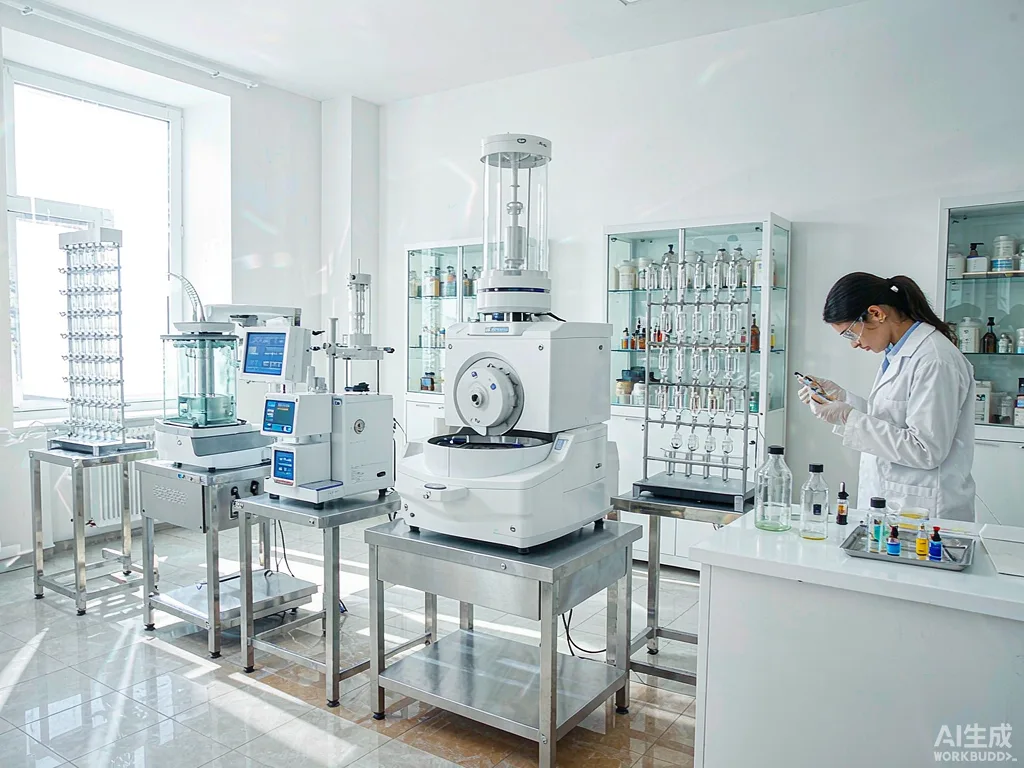
In the cosmetics industry, what truly determines the R&D strength of an ODM enterprise is not merely the number of R&D personnel or laboratory area, but more importantly whether it has formed a complete scientific research system spanning raw material research, formulation development, process optimization, efficacy evaluation and product realization.
, which has been deeply engaged in the field for nearly 20 years, has built around "fresh & active efficacy" a "two institutes, two stations and three centres" R&D system centred on the Natural Chinese Cosmetics Research Institute, the Shennongjia Natural Cosmetics Ingredient Research Institute, the Cosmetics Postdoctoral Research Workstation, the Guangdong Provincial Science and Technology Commissioner Workstation, as well as the Beauty Application R&D Centre, the Process Technology Research Centre and the Cosmetics Evaluation Centre.
This system is not a simple combination of departments, but a scientific research collaboration system covering the raw-material end, the R&D end, the technology end, the evaluation end and the industrialization end. This article deconstructs DEVA International">DEVA International's R&D architecture from multiple dimensions, to see how a cosmetics ODM enterprise builds more differentiated product solutions for brands through its scientific research system.
I. What is the "Two Institutes, Two Stations and Three Centres"?
The "two institutes, two stations and three centres" is an important part of DEVA International's current core scientific research system, composed of two major research institutes, two major research workstations and three major professional R&D centres.
Core R&D logic: Raw material research → Formulation R&D → Process technology → Efficacy evaluation → Product industrialization
TWO INSTITUTES
Two Institutes
The Natural Chinese Cosmetics Research Institute and the Shennongjia Natural Cosmetics Ingredient Research Institute drive R&D from the two directions of cosmetic application and distinctive natural raw materials, respectively.
TWO STATIONS
Two Stations
The Cosmetics Postdoctoral Research Workstation and the Guangdong Provincial Science and Technology Commissioner Workstation connect scientific research talent, universities, research institutions and enterprise industrialization needs.
THREE CENTERS
Three Centres
The Beauty Application R&D Centre, the Process Technology Research Centre and the Cosmetics Evaluation Centre cover key links such as formulation R&D, process transformation and product evaluation.
Raw material research
Formulation R&D
Process technology
Efficacy evaluation
Product industrialization
Through this division of labour, DEVA International has formed a complete R&D chain from "what to study" to "how to study," and then to "how to verify and mass-produce".
II. Two Institutes: Two Major Research Institutes, Building a Dual Engine from Raw Materials to Formulation
1. Natural Chinese Cosmetics Research Institute: Focusing on Cosmetic Application and Product Development
Natural Chinese Cosmetics Research Institute is a private non-enterprise research institute formally registered with the market supervision and administration department of Huangpu District, Guangzhou as the competent unit, with registration certificate number Yue-Sui-She-Zheng-Zi No. Yue-Sui-Pu 040065.
The institute inherits Oriental cultural and aesthetic concepts, combines traditional Chinese plant extracts with modern skincare technology, and conducts research on skincare and beauty solutions around different skin needs.
The institute brings together a R&D team of more than 30 industry experts and researchers represented by
Dr. Pang Keliang, Dr. Qiu Xiaoyi, Dr. Yang Botao (MD) and Professor Qu Haihong, covering multiple directions such as raw materials, formulation, efficacy evaluation and product development.
70+
National patents and related intellectual property achievements
5000+
Core botanical skincare formulations
30+
Industry experts and researchers
At present, the Natural Chinese Cosmetics Research Institute has formed:
More than 70 national patents and related intellectual property achievements;
More than 5,000 botanical skincare core formulations;
Coverage of multiple product fields such as infant-grade skincare, functional skincare and high-end hair & body care;
A core laboratory system designed and built to CNAS laboratory standards;
Multiple international and domestic scientific cooperation and industry-university-research cooperation projects.
Compared with simply establishing a "formulation R&D department," the institute model can further integrate talent, technology, equipment, research projects and industrialization resources, providing more systematic technical support for product development.
2. Shennongjia Natural Cosmetics Ingredient Research Institute: Focusing on China's Rare Species Ingredients
If the Natural Chinese Cosmetics Research Institute is more concerned with "how to develop raw materials into products," then the Shennongjia Natural Cosmetics Ingredient Research Institute extends further upstream of the R&D chain — exploring "where to obtain more distinctive raw materials."
Shennongjia Natural Cosmetics Ingredient Research Institute is formally registered with the Science and Technology Bureau of Shennongjia Forestry District, Hubei as the competent unit; it is a private non-enterprise research institute with registration certificate number: 52429021MJJ1785157 .
The institute focuses on research on Shennongjia's distinctive rare cosmetic raw materials, covering:
Research on raw-material ecological planting;
Research on raw-material extraction technology;
Research on raw-material R&D testing;
Research on raw-material product application efficacy;
Industry-university-research project cooperation;
New raw-material development and filing.
At the same time, it provides brands with raw-material customization services including raw-material IP customization, rare plant planting and traceability, new raw-material filing, intellectual property customization, exclusive technology and expert scientific research resource support.
Expert Team: From Plant Resources to Efficacy Application
The institute brings together a research team represented by Dr. Zhu Baofu, Dr. Zhao Haishan, Dr. Mo Kaiju and Dr. Ding Jinlong.
Among them, the expert team's research directions cover multiple areas such as natural active ingredient extraction, cosmetic safety evaluation, plant polysaccharide application and plant active substance research.
Through the collaboration of researchers with different professional backgrounds, the institute can conduct systematic research on distinctive plants from
resource screening, extraction and separation, component research, efficacy evaluation to product application.
Rare Raw-Material R&D Achievements
At present, the research team has achieved phased results in the applied research of Shennongjia's distinctive rare plants, and has successively developed 7 mass-producible rare-species extracts and compounded raw materials, among which the Shennong fragrant chrysanthemum has passed the national new-raw-material filing.
The currently formed "Chinese ingredients" R&D directions include:
| Raw Material Name | Raw Material Source | R&D Application Direction |
|---|---|---|
| Shennong fragrant chrysanthemum soothing factor | Shennongjia distinctive plant resources | Soothing, oil control, hydration, etc. |
| Shennong fairy algae® activating factor | Rare microalgae resources | Nourishing, moisturizing, repairing, etc. |
| Shennong black tea ferment | Shennongjia high-mountain black tea | Antioxidant, brightening skin tone, etc. |
| Shennong hundred-flower honey ferment | Shennongjia distinctive honey resources | Moisturizing, smoothing, firming, etc. |
| Shennong Paris polyphylla soothing factor | Shennongjia distinctive plants | Soothing, repairing, etc. |
| Shennongjia® strontium-rich low-sodium beauty water | Shennongjia natural water resources | Moisturizing and hydrating, etc. |
These raw-material R&D efforts do not stay at the laboratory stage, but are further advanced toward the directions of mass-producible, applicable and traceable.
2,000-Mu Natural Plant and Herbal Medicine Planting Base
In order to further strengthen the controllability of raw-material sources, DEVA International has carried out strategic cooperation with Shennongjia Forestry District and established an approximately 2,000-mu natural plant and herbal medicine planting base.
The planting resources cover distinctive plants such as Shennong fragrant chrysanthemum, Shennong black tea, Shennong high-mountain green tea and Paris polyphylla.
Plant planting → Raw material research → Extraction development → Efficacy evaluation → Formulation application → Product production
Thus a R&D chain from plant planting, raw material research, extraction development, efficacy evaluation, formulation application to product production is gradually formed, allowing distinctive raw materials to move from "origin story" further toward actual product application.
III. Two Stations: Two Major Research Workstations, Connecting Talent, Technology and Industry
1. Cosmetics Postdoctoral Research Workstation
DEVA International has the Cosmetics Postdoctoral Research Workstation of the Guangzhou Bay Area Biomedical Research Institute, carrying out scientific research talent introduction and technical research in the cosmetics field.
The workstation focuses on research directions such as plant raw-material extraction, fermentation, and new raw materials, new formulations and new technologies, and conducts research on plant resources such as rose, blue lotus, lingzhi (reishi), and Dendrobium officinale.
The significance of the postdoctoral research platform is not merely the talent label of "postdoctorate," but more importantly its ability to continuously introduce scientific research talent for the enterprise and combine research projects with actual industrial needs.
2. Guangdong Provincial Science and Technology Commissioner Workstation
DEVA International has also established the Guangdong Provincial Science and Technology Commissioner Workstation, and cooperates with scientific research resources such as the South China Technology Transfer Centre.
Through the science and technology commissioner mechanism, the technology, talent and scientific research achievements of universities and research institutions are connected with the actual production needs of enterprises, promoting the transformation of scientific research achievements into industrial applications.
Multi-Level Industry-University-Research Cooperation Network
In terms of external scientific research resource integration, DEVA International has carried out industry-university-research cooperation with six universities including Guangdong Pharmaceutical University, and established multiple technical cooperation platforms, including:
DEVA & France's Sequans Group joint innovation laboratory;
DEVA & HaiGui Baba infant and toddler product technology research centre;
Functional skincare joint innovation laboratory;
Relevant scientific research cooperation with the National Engineering Research Centre for New Drug Development.
Through the multi-party collaboration of universities, research institutions, enterprise laboratories and professional talent platforms, a collaborative model of "talent — technology — R&D — industrialization" is formed.
IV. Three Centres: Full-Chain Assurance from Formulation R&D to Product Mass Production
The two major research institutes undertake more front-end scientific research and applied research, while it is the three professional centres that truly bring R&D results to products.
1. Beauty Application R&D Centre: Turning Market Demand into Products
The Beauty Application R&D Centre is oriented to market demand and brand customer value, focusing on:
Introduction and application of new technologies and new raw materials;
New formulation debugging and finalization;
Formulation sampling and adjustment;
Stability research on basic formulation systems;
Product concept development;
Product application R&D.
From market insight, to product concept, formulation design, sampling testing, and finally product realization, the Beauty Application R&D Centre is responsible for transforming "scientific research achievements" into "products that consumers actually use."
For an ODM enterprise, this link is especially important.
Because what brand owners truly need is not a scientific research achievement stuck in the laboratory, but a complete product solution that can meet
market positioning, product positioning, consumer needs and cost structure.
2. Process Technology Research Centre: Solving "How to Mass-Produce Laboratory Formulations"
A formulation's success in the laboratory does not mean it can directly enter the production line.
From laboratory samples of tens of grams or a few kilograms, to industrial production at hundreds of kilograms or even larger scales, there are still multiple process variables in between involving emulsification, dispersion, temperature, rotation speed, addition order and stability.
Laboratory formulation → Pilot formulation → Mass-production formulation
Its main work includes:
Micro-adjustment and compounding from laboratory formulation to mass-production formulation;
Ensuring that mass-produced products remain highly consistent with the confirmed samples;
Research and application of new production processes;
Application of microcapsule encapsulation technology;
Application of intelligent delivery technology;
Microbiological and heavy-metal testing of raw materials before warehousing;
Random inspection of packaging materials upon warehousing.
Through process technology research, R&D results are further transformed into stable, reproducible and scalable products.
3. Cosmetics Evaluation Centre: Giving Product R&D Data Support
After product R&D is completed, a key question still needs to be answered:
Is the product actually safe? Is it stable? Can its efficacy be verified through scientific evaluation?
This is also the important function undertaken by the Cosmetics Evaluation Centre.
DEVA International's core laboratory is designed and built to CNAS laboratory standards, and is equipped with multiple professional laboratories covering multiple testing dimensions from the cellular level to product efficacy, raw material analysis and packaging compatibility.
V. Multiple Professional Laboratories, Building the R&D Testing "Data Foundation"
1. Cell Laboratory
The cell laboratory is equipped with BDS400 inverted biological microscope, enzyme-linked immunosorbent assay analyser, CO2 incubator, -86°C medical deep freezer, -196°C liquid nitrogen tank, cell counter and other equipment, establishing a cell culture and testing system.
Through cell models such as RAW264.7, HaCaT, B16F10 and HSF, combined with cytotoxicity testing and related indicator analysis, cellular-level data support is provided for the efficacy research and safety evaluation of raw materials and products.
2. Product Efficacy Evaluation Room
The product efficacy evaluation room is equipped with the US laboratory-grade VISIA facial skin image analyser and the ANTSCI Skin-SP skin tester.
Through skin images and related testing data, multiple skin indicators such as spots, wrinkles, texture, UV spots, pores, brown spots, red areas, moisture, oiliness, cutin and collagen are analysed, providing data support for product efficacy research and related claims.
3. Active Ingredient Analysis Room
The active ingredient analysis room is equipped with:
One-hundred-thousandth electronic balance
Ultraviolet spectrophotometer
High-performance liquid chromatograph
High-performance gas chromatograph
Mainly used for the qualitative, quantitative and analytical research of related active ingredients in cosmetic raw materials and products.
For "fresh & active efficacy" products, what exactly is in the raw materials, how much, and whether it is stable between batches is an important foundation for R&D and quality control.
4. Plant Extraction and Fermentation Room
The plant extraction and fermentation room is equipped with plant extraction and fermentation equipment, ceramic membrane separation machines and other equipment.
Using plants such as rose, blue lotus, Dendrobium officinale, lingzhi and cordyceps as research objects, natural plant active substance research is carried out through extraction, fermentation and separation of active ingredients of different molecular weights.
This laboratory forms upstream and downstream collaboration with the Shennongjia Natural Cosmetics Ingredient Research Institute:
Distinctive plant resources → Plant extraction/fermentation → Active ingredient research → Efficacy evaluation → Formulation application
5. Heavy Metal Testing Room
The heavy metal testing room is equipped with atomic fluorescence photometers and other testing equipment for testing related heavy-metal items.
Through related testing of raw materials and products, it assists in judging whether they comply with relevant national regulations and standards, providing a testing basis for product safety and quality control.
6. Hen's Egg Chorioallantoic Membrane Test Room
The hen's egg chorioallantoic membrane test room uses the complete and clear vascular system of the chorioallantoic membrane to evaluate product irritation by observing related changes after the test substance acts on it.
This type of in vitro evaluation method can serve as a component of the safety evaluation system in the cosmetic R&D stage, providing supporting data for product development.
7. Preservative Challenge and Evaluation Laboratory
Cosmetics usually contain multiple ingredients such as water, oils and plant extracts, so the product preservation system is also an important link in the R&D process.
The preservative challenge laboratory evaluates the effectiveness of the product preservation system through related tests, helping R&D personnel judge the stability performance of the preservation system during the product storage cycle.
8. Container Compatibility Testing Room
In addition to the product itself, packaging materials also affect the quality of the final product.
DEVA International is equipped with a container testing room, with equipment such as
xenon ageing lamp, high-precision electronic balance and vacuum pump.
For containers in direct contact with the contents, related tests and risk assessments are carried out before product development and production, focusing on:
Functionality · Safety · Process risk · Directional limit · Compatibility · Sealability · Light resistance · Compatibility · Migratability
thereby reducing potential compatibility risks between products and packaging materials.
This also means that DEVA International's R&D does not only focus on "formulation," but further extends to the overall compatibility between formulation — packaging — finished product.
VI. How Does the "Two Institutes, Two Stations and Three Centres" Truly Empower Brands?
For brand owners, the value of a scientific research system ultimately has to land on products and the market.
01 / Raw Material IP
Raw-material IP customization, helping brands build differentiation
Relying on the Shennongjia Natural Cosmetics Ingredient Research Institute and distinctive plant resources, DEVA International can carry out services such as raw-material IP customization, distinctive plant planting and traceability, new raw-material filing and intellectual property customization around brand positioning.
For brands hoping to build "Chinese ingredients" or distinctive plant concepts, they can upgrade from the traditional "purchasing generic raw materials" further to
distinctive raw-material R&D and brand-exclusive raw-material stories.
02 / R&D Collaboration
From raw materials to finished products, shortening the R&D collaboration chain
Traditional brand R&D often needs to look for separately:
Raw material supplier → Formulation company → Efficacy evaluation institution → Packaging supplier → Production factory
While a complete ODM R&D system can concentrate more links within the same industrial chain system.
03 / Expert Team
Experts and research team, providing professional support for product R&D
From the two major research institutes to the postdoctoral research workstation, DEVA International brings together professional talent from different fields such as chemistry, biomedicine, plant science, dermatology and cosmetic R&D.
This includes experts such as Dr. Zhu Baofu, Dr. Pang Keliang, Dr. Qiu Xiaoyi, Dr. Yang Botao (MD) and Professor Qu Haihong, as well as more than 30 industry R&D experts.
04 / Industrialization
From laboratory R&D to industrial realization
The true test of an ODM enterprise's R&D strength is whether it can stably produce a good formulation from the laboratory.
Scientific research achievements → Product R&D → Efficacy evaluation → Process transformation → Stable mass production
This is also an important difference between a "scientific research system" and a mere "R&D department."
VII. Why Is It Worth Learning More About DEVA International?
The R&D strength of a cosmetics ODM enterprise is ultimately not just reflected in "how many doctors," "how many instruments" or "how many patents."
What is truly valuable is whether these resources can form a continuously operating scientific research system, and ultimately be transformed into the products that brands truly need.
From the upstream Shennongjia Natural Cosmetics Ingredient Research Institute, to the Natural Chinese Cosmetics Research Institute focusing on formulation and application; from the Postdoctoral Research Workstation and Science and Technology Commissioner Workstation responsible for scientific research talent and achievement transformation, to the three professional centres responsible for product R&D, process transformation and efficacy evaluation, DEVA International is building a complete R&D chain covering "raw materials — R&D — process — evaluation — mass production."
Especially today, as functional skincare, infant-grade skincare and Chinese-characteristic plant raw materials continue to receive market attention, the true competitiveness of ODM enterprises is gradually shifting from mere production capacity to raw-material R&D capability, product innovation capability, efficacy evaluation capability and industrialization capability.
For brands that are looking for cosmetics ODM/OEM partners, rather than just looking at how big the factory is or how many production lines it has, it is better to further understand an enterprise's R&D team, scientific research system, laboratory capability, raw-material reserves and whether its R&D results can truly achieve industrialization.
And this is precisely the R&D confidence behind DEVA International's "fresh innovation, real efficacy."