
Sensitive Skin ODM: How to Stand Out in the Soothing & Repair Race
Published 2026-10-16 14:41:08 · Tiensi
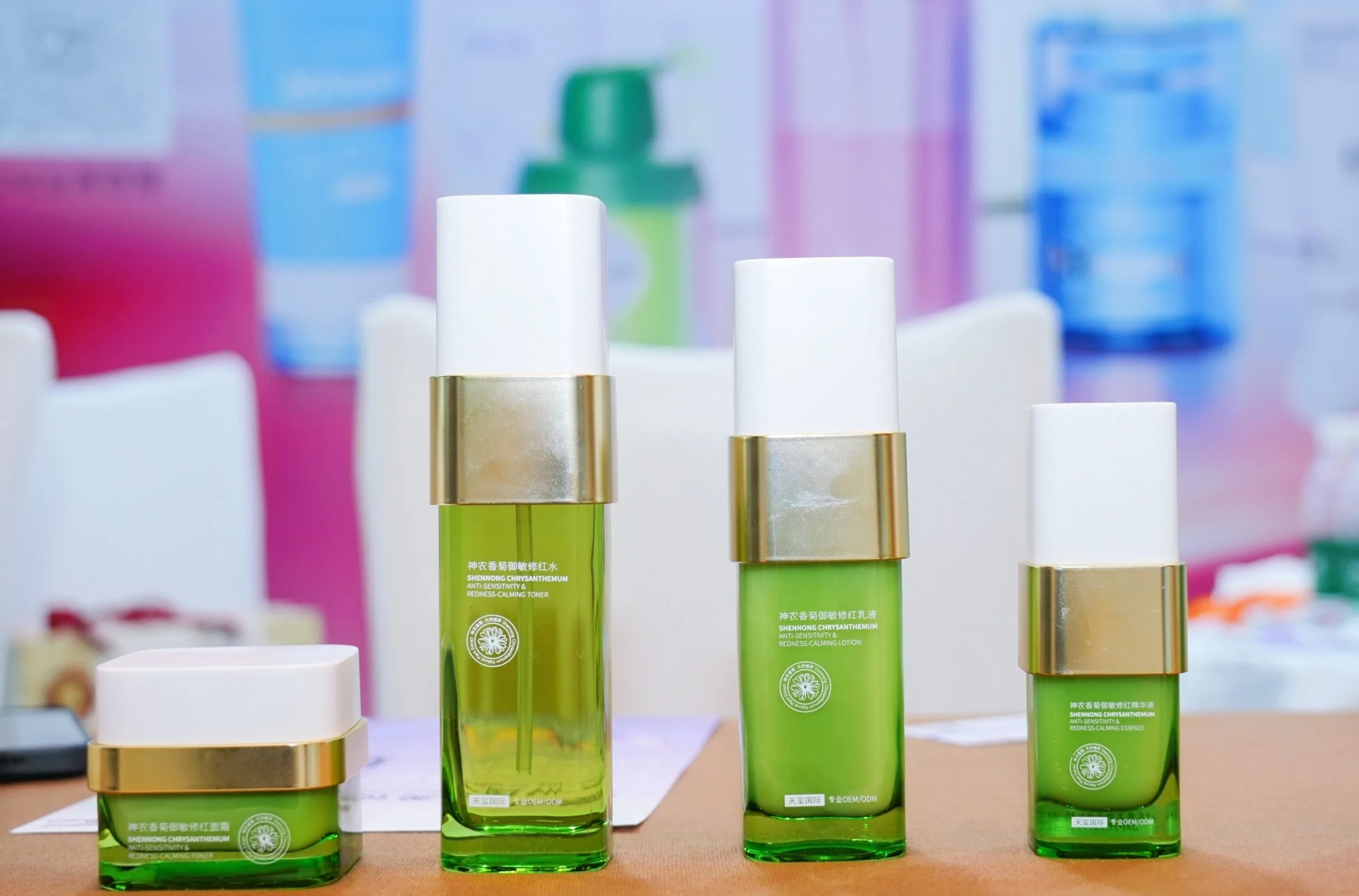
A few words up front: for the past few years, skin that turns red, dry and itchy at the slightest provocation is no longer the problem of a small minority. More and more consumers place themselves in the sensitive-skin camp, and that has created a category that keeps expanding — soothing and barrier repair. For brands looking to enter this space, how to select a sensitive-skin skincare manufacturing partner and how to build something distinctive is often a harder question than whether to enter the category at all. This article breaks down the market, the ingredients, the mechanisms and the manufacturing capability.
I. Why Is the Sensitive-Skin Market So Hot?
Against a backdrop of slowing growth in several skincare categories, sensitive-skin products have held their momentum. The logic behind it is plain: environmental change, late nights, over-cleansing and frequent acid exfoliation have made skin that "reacts" far more common. Many people are not born sensitive — they damage their barrier through daily habits, which turns repair into an everyday need rather than an emergency measure taken when skin flares up.
The channel signals point the same way — posts on "skin barrier recovery" and "seasonal redness" stay popular on Xiaohongshu and Douyin, and soothing products in offline pharmacy channels are recovering too. For brands, this is a segment with a clearly defined customer base and strong repeat purchase behaviour, but precisely because the entry bar looks low, commoditisation is severe. Put differently, building a product is not hard; building one that is recognisable is.
II. Which Ingredients Sit at the Core of Soothing and Repair?
The ingredients that genuinely do the work are, more often than not, a few familiar names that have been validated repeatedly. Understanding what each one is good at is the first step toward a differentiated formula.
1. Ceramides: the Cement in the Brick Wall
The skin barrier is often described as a brick wall: corneocytes are the bricks, intercellular lipids are the mortar, and ceramides are the most important component of that mortar. Sensitivity, dryness and flaking are often the result of ceramide loss, which leaves the wall leaking. In sensitive-skin skincare manufacturing, ceramides are close to mandatory for soothing and repair lines — the difficulty lies in ratio and stability, not in whether they are included at all.
2. Centella Asiatica and Purslane: the Botanical Fire Extinguishers
Centella asiatica, particularly its actives asiaticoside and madecassoside, has a solid track record on soothing redness and supporting repair. Purslane is the affordable soothing agent Chinese formulators reach for often, easing stinging and itching. Both are gentle, which suits gentle-positioning narratives, and both appear often in pure formulas intended for pregnancy and baby-and-child use.
3. Panthenol B5, Ectoin and Bisabolol: Each Handles One Step
Panhenol (vitamin B5) focuses on hydration and healing; ectoin comes from halophilic bacteria and excels at buffering external stress and helping cells hold steady; bisabolol does more of the inflammation-soothing, sting-reducing work. They rarely work alone — more often they occupy supporting roles in a blend, strengthening the overall experience.
Factory selection note: ask the manufacturer for a written statement on ingredient sourcing and addition levels, rather than relying on the ingredient list on the brochure. The effective concentration, purity and supplier qualifications of soothing ingredients determine whether the product genuinely repairs or merely gestures at it.
III. What Is Barrier Repair Actually Repairing?
Many brands talk about repair constantly, but what consumers actually perceive comes down to a few concrete scenarios: no tightness after cleansing, no redness when the season turns, no stinging under makeup. Translated into formulation goals, that is three things — replenishing lipids, reducing inflammation, and locking in water.
Lipids are replenished through ceramides and other intercellular lipids; inflammation is reduced through botanicals such as centella and bisabolol; water is locked in through a multi-humectant system involving glycerin, hyaluronic acid and panthenol. A good soothing formula is not a list of ingredients — it is a closed loop across these three goals. Notably, repair products universally emphasise low fragrance, low alcohol and low irritation, which is the exact opposite of the harsh-active logic — the more you subtract, the more formulation skill is required.
IV. How Can Sensitive-Skin Skincare Manufacturing Stand Out?
The category is crowded, and "we make a repair cream too" is not memorable. From what we have observed, brands that break through tend to have taken one of three positions.
Direction One: R&D Collaboration That Makes Credibility Real
Sensitive-skin users fear becoming more sensitive, so hospital and dermatology affiliations carry unusual persuasive weight. Partnering with a manufacturer that has an R&D system and can issue efficacy test reports — turning R&D collaboration into real test data — is far stronger than a slogan.
Direction Two: Minimal Formulas, Built Around Less Is More
An ingredient list of a dozen lines, with no fragrance, no colourants and no alcohol, is friendly to both sensitive skin and beginners. Products like this test the manufacturer's preservative alternatives and stability control — the simpler the formula, the less room there is for error.
Direction Three: Skin-Type Segmentation for Specific Groups
Sensitivity comes in different forms, and oily-sensitive, dry-sensitive and acne-sensitive skin have entirely different needs. Offering versions by skin type — an oil-control soothing variant for oily-sensitive skin, a high-hydration repair variant for dry-sensitive skin — is more precise than a one-size-fits-all universal repair product. This follows the same logic as DEVA INTERNATIONAL's age-segmented skincare approach, and is especially worth referencing when building a baby-and-child-grade or pregnancy-safe soothing line; corresponding systems are available in the product centre.
Pitfall note: do not equate differentiation with adding more ingredients. Consumers in soothing and repair are, if anything, wary of complexity. Differentiation should come from clearer positioning, steadier efficacy and more credible evidence — not from a longer ingredient list.
V. How to Assess a Manufacturer's R&D and Testing Capability
When selecting a factory, do not fixate on price. What actually determines whether a soothing line holds up is the hard infrastructure behind the manufacturer. These are the points worth confirming:
- Efficacy validation: can they run human efficacy evaluation and patch testing and issue credible reports? This is the foundation of any credibility-led narrative.
- Quality management system: do they hold ISO 22716, GMPC and similar qualifications, and can the production environment support low-burden, low-irritation formulas?
- Formula library and customisation: do they have mature soothing and repair base formulas that can be adjusted to the brand's positioning, rather than relabelled private-label products?
- Special registration and compliance: if the product makes brightening or sun protection claims, can the manufacturer take on special cosmetics registration work?
ODM companies strong in fresh-active efficacy cosmetics, such as DEVA INTERNATIONAL, draw on a "two institutes, two stations, three centres" research system and can offer a relatively complete chain from formulation to testing in their cosmetics ODM services — a good fit for brands that want to launch a soothing line quickly and safely.
VI. FAQ
Q1: How do sensitive-skin products differ from ordinary moisturisers? A: The core is low irritation plus barrier repair. An ordinary moisturiser only addresses dryness; a soothing repair product also reduces inflammation and replenishes lipids, using a more restrained formula with less fragrance and fewer additions.
Q2: How long does it take to bring a soothing line to market? A: It depends on whether a mature base formula is used. Fine-tuned customisation is usually faster than developing from scratch; if special registration or new efficacy validation is involved, timelines extend accordingly.
Q3: Can a small brand differentiate by skin type? A: Yes, and it is more cost-effective. Going deep on one narrow group, such as oily-sensitive skin, builds a clearer memory point than a broad claim of repair for everyone.
Q4: How do you tell whether a manufacturer's repair claims are real? A: Look for a human efficacy evaluation report, patch test results and stated addition levels for the active ingredients — not the copywriting.
About DEVA INTERNATIONAL
Guangzhou DEVA Biotechnology Co., Ltd. has spent nearly 20 years on the R&D and manufacture of fresh-active efficacy cosmetics. Guided by fresh creation, real efficacy and backed by the "two institutes, two stations, three centres" research system, it is a cosmetics ODM company offering brands manufacturing services across sensitive skin, baby-and-child, brightening special registration and full-spectrum sun protection, with support for Southeast Asian expansion.
Learn more at www.txodm.com
About DEVA INTERNATIONAL
Guangzhou DEVA Biotechnology Co., Ltd. has spent nearly 20 years on the R&D and manufacturing of "fresh-efficacy cosmetics", is a cosmetics ODM company built on the "Two Institutes, Two Stations, Three Centers" research system and holding to "Fresh Creation, Real Efficacy", offers brands a range of manufacturing services covering sensitive skin, baby care, brightening and spot-reducing special certificates and full-spectrum sun protection, and supports Southeast Asia expansion. Learn more at www.txodm.com