
Private Label Skincare Process: From Sampling to Shipping
Published 2026-08-19 00:00:00 · Tiensi
Guide // OEM GUIDE
Private-label skincare manufacturing is far more than simply "finding a factory, making a product and taking delivery." From upfront requirement communication and formula development to packaging confirmation, filing and testing, bulk production and final delivery, every step affects a product's time-to-market and ultimate quality. Following the actual OEM/ODM collaboration process, this article breaks down the 10 key steps of private-label skincare manufacturing and, combined with the factory's R&D, testing, production and delivery stages, maps out a complete product-development path for brands.
01
Requirement Communication and Product PositioningThe first step in private-label manufacturing is not to ask a factory for a quote right away, but to think through your product requirements first. The clearer the product positioning, the easier it becomes to advance formula development, packaging selection, cost accounting and production planning.
You need to clarify the following information:
Product type:Creams, serums, masks, cleansers, sunscreens, wash-care products… define the specific category.
Target audience:Infants and toddlers, sensitive skin, oily and acne-prone skin, mature skin, etc.—different audiences call for different formulation approaches.
Efficacy direction:Moisturizing and hydration, whitening and spot-removal, anti-wrinkle and firming, soothing and repair, sun protection, etc.
Price positioning:Mass-market, mid-range or high-end will directly affect raw-material, formula and packaging costs.
Target market:Domestic or overseas market—different markets correspond to different regulatory and certification requirements.
Practical suggestion:Before formally approaching a contract manufacturer, prepare a simple product requirement document (BRD) covering the product name, specifications, target price, core selling points, etc., so the factory can understand your needs faster and propose a targeted solution.
02
Custom Solution ProposalAfter you submit requirements, the factory's marketing and R&D teams will further break down the product direction based on your brand positioning. This stage determines the general route of subsequent product development and directly affects the product's cost, selling points and launch rhythm.
Formula direction suggestion:Recommend a suitable formulation system based on efficacy needs and target audience.
Packaging suggestion:Recommend bottle shapes, pump heads, outer boxes, etc. based on product type, positioning and budget.
MOQ note:Clarify the minimum order quantity for different categories to help brands plan their first order volume.
Development timeline planning:Estimate the overall timeline from sampling and confirmation to production and delivery.
's market support:DEVA established its Market Development Center as early as 2016, gradually building a professional team for market analysis, translation, insight and application. It deeply uses industry-information and big-data tools such as Mintel, Meili Xiuxing, the Meiyan Research Institute, Business Advisor and Feigua Data—covering raw-material application hotspots, niche-market analysis, efficacy trends and the new-product logic of representative brands—to provide new brands with new-product proposal support.
03
Sample DevelopmentSample development is a critical stage in private-label manufacturing and the phase with the deepest communication between brand and factory. Whether the formula fits the positioning, the skin feel meets expectations and the stability is reliable are all gradually verified at this stage.
Typical sample-development workflow
① Formula sampling
The R&D team designs the formula based on brand requirements and produces the first batch of samples.
② Sample testing
Conduct stability testing, safety assessment, efficacy verification, preservation challenge testing, etc. based on product characteristics.
③ Skin-feel optimization
Adjust the product texture, absorbency, fragrance and other sensory experiences based on brand feedback.
④ Sample confirmation
After the brand confirms the final sample, both parties sign and seal the sample, which becomes an important physical standard for subsequent bulk production.
Packaging compatibility testing
Alongside sample development, packaging compatibility testing is also required. Different contents impose different requirements on packaging materials; a wrong combination may cause product-quality variation, difficulties in production, shortened storage life and breakage during transport. Therefore, pre-production packaging adaptability, safety and compatibility testing are essential.
DEVA's testing capabilities:DEVA is equipped with professional laboratories such as an active-ingredient analysis room, a heavy-metal testing room and a container testing room, along with testing equipment including a one-hundred-thousandth electronic balance, UV spectrophotometer, high-performance liquid chromatograph and atomic fluorescence photometer. It has established over 150 efficacy and safety test standards, including cell evaluation tests, hen's egg chorioallantoic membrane (HET-CAM) irritation tests and preservation challenge tests.
04
Packaging Confirmation and Copy Compliance ReviewAfter sample confirmation, the process enters the packaging-design confirmation stage. This step relates not only to the product's final presentation but also directly to subsequent printing, filing and launch progress.
Main contents of packaging confirmation
Bottle-shape confirmation:Confirm packaging material, color and craftsmanship.
Label confirmation:Confirm label content, size and material.
Outer-box confirmation:Confirm outer-box structure, printing craft and boxing method.
Design-file review:The packaging design draft should be reviewed by the relevant department for label compliance before entering printing production.
Copy compliance review · Don't wait until after printing to find problems
Copy on product packaging must comply with relevant cosmetics regulatory requirements, including product name, efficacy claims, ingredient list and label markings. The brand bears corresponding responsibility for packaging copy; it is recommended to have the factory's compliance personnel review it before finalization, to reduce the risk of problems during filing or launch.
05
Contract Signing and Qualification-Document PreparationBefore formally entering production, an "Entrusted Processing Contract" must be signed and relevant qualification documents prepared. The clearer the contract, the lower the communication cost on subsequent issues such as quality, delivery, packaging and acceptance.
Required contract annexes
Copy of the brand's registered trademark
Copy of the brand's business license
Trademark authorization letter from the brand entrusting the factory to process the product
Design artwork for the product outer packaging and bottle body
Product variety and name, and a detailed quotation and processing-fee schedule
Standard sample of the processed product's contents and the first bulk-production sample, both mutually approved, with confirmation signature and version sealing
Intellectual property protection:It is recommended to sign a "Confidentiality Agreement" together with the contract, clarifying the use and ownership of the formula, manufacturing process, technical information and related results formed during cooperation, and setting corresponding confidentiality and breach-of-contract liability clauses.
06
Raw-Material Procurement and Packaging PreparationAfter the contract is signed, the process enters the pre-production material-preparation stage. Whether raw materials and packaging arrive on time and to standard directly affects subsequent scheduling and delivery.
Raw-material procurement
Procure the required raw materials according to the confirmed formula.
After raw materials arrive at the factory, conduct relevant testing including active-content, heavy-metal and related-indicator tests.
A proper contract manufacturer should establish a stable raw-material supply system and manage suppliers and raw-material quality control well.
DEVA's raw-material system:All of DEVA's raw materials come from suppliers in the United States, Spain, France, Germany, Japan, South Korea and elsewhere, and it has partnered with globally renowned companies such as AkzoNobel, Clariant, BASF, Symrise, Dow, DSM and DuPont. DEVA insists on procurement through formal channels, and requires both the five certificates and raw-material quality-inspection reports without exception.
Packaging procurement
The brand may choose to have the factory procure packaging on its behalf, or procure it itself.
When choosing customer-supplied packaging, communicate with the factory in advance and obtain material-selection advice and precautions for supplied materials.
After packaging arrives at the factory, conduct pre-production testing to ensure compatibility between packaging and contents.
All packaging should be delivered in advance per the factory's scheduling requirements, so inspection, scheduling and warehousing can be completed.
07
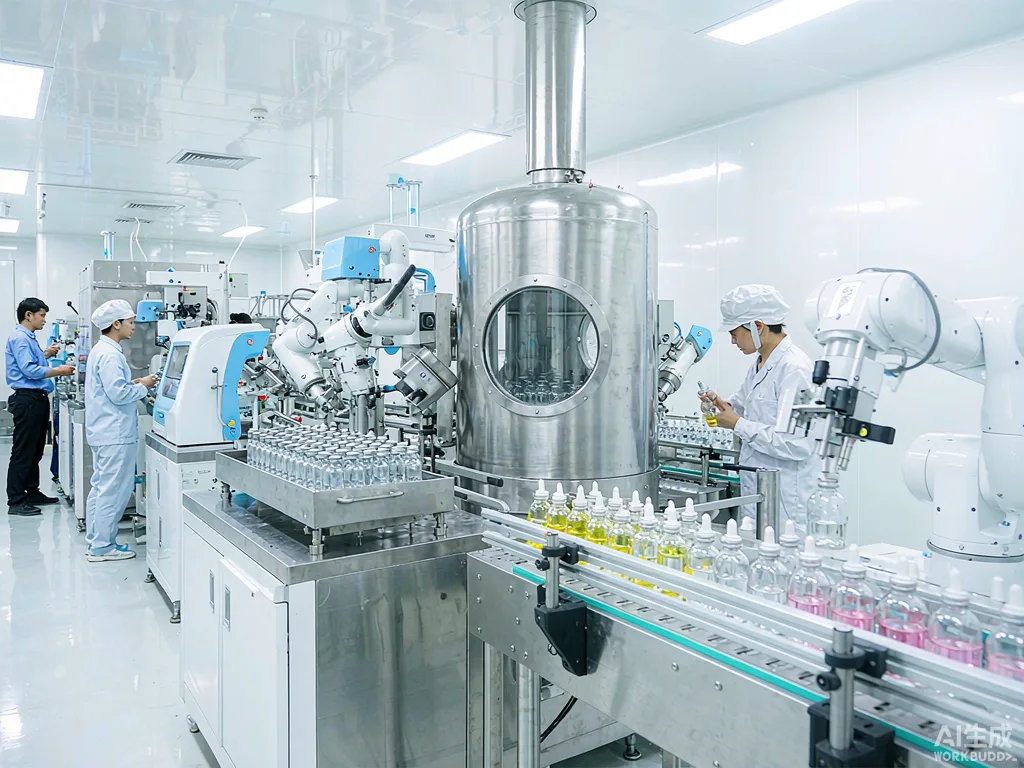
Bulk ProductionOnce materials are ready and pre-production confirmation is complete, the process enters the bulk-production stage. Formal production typically includes multiple steps such as ingredient weighing and emulsification, filling, packaging and labeling.
① Ingredient weighing and emulsification
Weigh raw materials precisely per the confirmed formula and produce the base through processes such as emulsification and homogenization. DEVA is equipped with German-imported LEXA-MIX vacuum homogenizing emulsification equipment and 500 kg, 1-ton and 3-ton emulsifying kettles, capable of producing creams, lotions, serums, eye creams, aqueous products and more.
② Filling
After the base passes inspection, it enters the filling stage. DEVA is equipped with pharmaceutical-grade fully automatic ampoule-filling equipment, pneumatic automatic cream-filling machines, automatic serum and aqueous-product filling machines, fully automatic mask-filling equipment, etc., with a daily output of 500,000 PCS of ampoules and 100,000 PCS of creams.
③ Packaging and labeling
Filled products enter the packaging workshop for labeling, boxing, shrink-wrapping and other processes. DEVA's packaging workshop has 9 automatic production lines, equipped with US-brand Videojet inkjet coders, single-product 3D automatic packaging machines and full-case automatic packaging machines, with a monthly output of over 10 million PCS.
Quality control during production:From raw materials to finished products, every step is inspected and tested, with checks at each level. Premium raw materials are selected, pass through 72 tests, undergo strict sampling monitoring, full-process manufacturing inspection and traceability records to ensure product quality.
08
Product Testing and FilingAfter production is completed, the process enters the testing and filing stage. The specific path varies by product category, launch market and relevant regulatory requirements.
Reference filing workflow
The factory provides product samples and relevant documents.
The brand or factory sends the product to a qualified testing institution.
After passing testing, file or register accordingly based on product category.
After completing the relevant procedures, proceed with launch and sales as required.
DEVA's compliance support:DEVA has a professional registration team to assist brands with filing and efficacy evaluation, ensuring efficacy claims are rigorous and compliant, and provides related support for product launch through testing, stability verification, safety assessment and other steps.
09
Finished-Product Inspection and ShipmentAfter completing relevant testing and filing procedures, the product enters the finished-product inspection and shipment stage. Before formal shipment, a final round of quality confirmation is still required.
Finished-product inspection
Physical and chemical indicator testing for each batch
Microbiological testing
Sensory inspection of appearance, odor, skin feel, etc.
Consistency comparison against the sealed sample
DEVA's delivery capability:DEVA has 3 modern smart-manufacturing factories plus an overseas factory in Indonesia, equipped with 100,000-grade international-GMPC-standard production workshops, with a monthly capacity of over 20 million PCS, providing efficient and agile supply-chain services.
10
Post-Launch Quality TrackingProduct delivery does not mean the entire collaboration process is over. For long-term partner brands, post-launch quality tracking is equally important.
Sample retention observation:Retain samples for each batch and observe and monitor physical, chemical, microbiological and other indicators per relevant requirements.
Quality traceability:Establish a product-quality traceability system and record information on raw materials, production, inspection, etc.
After-sales support:Assist the brand in handling post-launch quality feedback and related issues.
11
How long does the whole process take?The overall timeline for private-label skincare manufacturing is not fixed. Formula-development speed, packaging-customization lead time, testing and filing progress, and brand confirmation efficiency all affect final delivery time. The following timelines can serve as a reference for early project planning.
Stage | Reference period | Main work |
|---|---|---|
| Requirement communication and proposal | 1–3 days | Submit requirements; factory provides product proposal |
| Sample Development | 7–15 days | Formula sampling, testing, optimization |
| Packaging confirmation | 2–3 days | Bottle shape, label, outer-box confirmation |
| Packaging production | 15–20 days | Packaging procurement or customization |
| Product testing | About 7 working days | Conduct relevant testing by product category |
| Product filing | About 7 working days | Complete the filing process per relevant requirements |
| Bulk Production | 7–15 days | Production, filling and packaging |
| Overall reference | About 45–60 days | Excluding extra lead times such as special packaging customization |
Timeline reminder:The above timelines are for project-planning reference only; actual time is affected by factors such as product category, formula complexity, packaging-customization lead time, and testing and filing progress. For new brands cooperating for the first time, it is advisable to reserve more ample time in advance.
12
What should you really look at when choosing a factory?After reviewing the entire private-label production process, you will find that a contract factory's professionalism is reflected not merely in "whether it can produce," but in whether R&D, testing, compliance, production and delivery can form a complete closed loop.
Production qualification:Whether it holds a legal cosmetics production license and whether its licensed scope covers the target category.
R&D strength:R&D team size, number of patents and reserve of mature formulas.
Testing capability:Whether it has testing capabilities such as raw-material testing, stability testing and safety assessment.
Quality control:Whether it has established a sound quality-management system such as ISO 22716 and GMPC.
Compliance service:Whether it has a professional team to assist with filing, testing and efficacy evaluation.
Capacity and delivery:Number of production lines, capacity scale and delivery-assurance capability.
Cooperation experience:Whether it has mature project experience matching your product category.
About DEVA International // DEVA INTERNATIONAL
Guangzhou Tianxi Biological Technology Co., Ltd. (DEVA International) was founded in 2006 and specializes in the technology R&D and smart manufacturing of infant-grade skincare and fresh & active efficacy cosmetics. It has 3 modern smart-manufacturing factories plus an overseas factory in Indonesia, equipped with 100,000-grade international-GMPC-standard production workshops and a monthly capacity of over 20 million PCS. The company has built a "Two Academies, Two Stations, Three Centers" research system, holds over 70 national patents and more than 5,000 core mature formulas, and serves over 300 leading and emerging brands annually across segments such as infant skincare, functional cosmetics and wash care, providing one-stop /OEM customization services.