
Baby-Grade Skincare: What It Means & DEVA's Safety Standards
Published 2026-08-31 00:00:00 · Tiensi
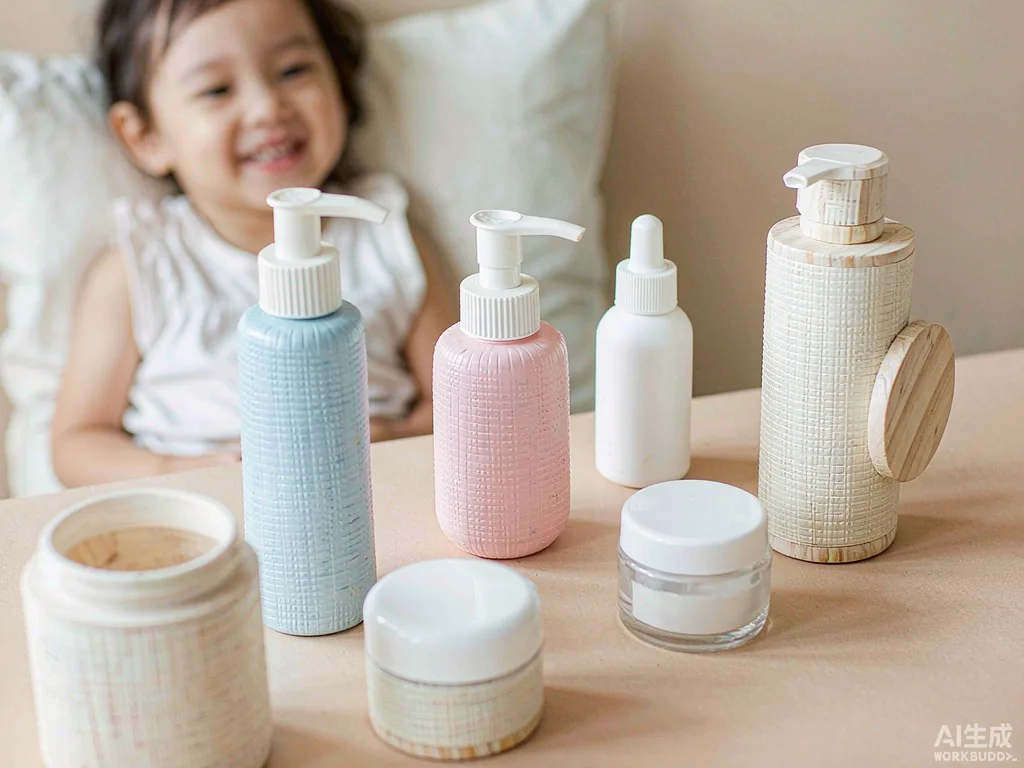
When "Baby-Grade" Became the New Skincare Benchmark
Over the past year, "baby-grade skincare" has moved quickly from a niche term in parenting circles into the mainstream skincare conversation. It is no longer just about children — it points to a widely recognized higher safety baseline, with even sensitive-skin adults now actively seeking "adult skincare at baby-grade" products. Yet for brands and consumers alike, what "baby-grade" actually means is often vaguely interpreted. Using the practice of as a case study, this article unpacks the real logic behind these safety standards.
What Exactly Is "Baby-Grade Skincare"?
The core of "baby-grade skincare" is moving the safety threshold that infants and children can tolerate to the very starting point of every product's development. Because infant and child skin has a thin barrier and weak tolerance, formulas must be stripped back: simplified ingredients, elimination of high-irritation risk substances, mild surfactants and tear-free formulas, with toxicological and skin testing set as a hard gate before products leave the factory. Its real value lies in "cross-age versatility" — a system designed for fragile skin that also covers sensitive-skin adults, expectant mothers, and even ordinary consumers who want the gentlest possible care. This is also the thinking behind DEVA's "adult skincare at baby-grade" concept: not lowering the standard, but letting more people enjoy the sense of safety that originally belonged to babies.
Common Signs
Noticeably shorter ingredient lists, proactively avoiding fragrance, alcohol, and high-allergen preservatives
Tear-free formulas as the headline claim — no stinging on eye contact, suited to cleansing and bath products
Packaging that displays third-party verification such as "passed skin irritation testing"
Sensitive-skin and expectant-mother groups explicitly listed as suitable users, reflecting cross-age versatility
Five Core Indicators of Baby-Grade Skincare
At the level of actionable formula and manufacturing, "baby-grade skincare" is defined by a set of clear indicators. Together they raise the safety bar for products and form the real R&D strength of a contract manufacturer. These five dimensions are the basic yardstick for judging whether a baby-grade safety standard truly "passes."
01 | Simpler Ingredients
Keep the formula list as short as possible while staying effective, reducing the buildup of unnecessary additives.
02 | Non-Irritating Preservation System
Replace traditional high-risk preservatives with polyols and mild preservatives to lower the chance of sensitization.
03 | Mild Surfactants
Choose low-irritation surfactants such as amino acids to reduce barrier damage from cleansing.
04 | Tear-Free Formula
Verified through the eye-drop test — no noticeable stinging when the product gets into the eyes, suited to skin-contact scenarios.
05 | Toxicology and Skin Testing
With toxicological safety as the premise, layer on human skin irritation, patch, and other verification steps.
How DEVA Rewrote Safety and Efficacy with Its "Baby-Grade" Standard
DEVA turned "baby-grade" from a slogan into a quantifiable engineering system. Its baby-grade standard includes 11 toxicological tests and introduces the eye-drop test to verify tear-free formulas, paired with skin irritation testing to eliminate high-risk ingredients at the source. On top of that, DEVA has built 150+ efficacy and safety testing standards covering the full chain from raw-material intake to finished-product release. Crucially, this standard was not achieved at the cost of efficacy. Relying on its "two academies, two stations, three centers" research system and a library of 5,000+ proven formulas, DEVA pursues safety and effectiveness together under its "fresh & active, real efficacy" philosophy — which is exactly why baby-grade skincare can win acceptance in the adult market.
Pitfall to Avoid
When evaluating a "baby-grade" contract manufacturer, brands should ask for the specific test list and reports rather than relying on marketing language alone. Only a factory that can clearly state the number of toxicology items and whether it has eye-drop and skin irritation verification truly has baby-grade R&D and testing capability.
The Essential Difference Between Baby-Grade and Ordinary Skincare Standards
An ordinary skincare standard asks whether a product is "basically safe under reasonable use," while a baby-grade standard asks whether it stays safe "even on the most fragile skin." This difference shows up in two dimensions: a stricter threshold and more conservative ingredient choices. The former allows trade-offs between risk and efficacy; the latter tends to clear the risk first. The former is more tolerant of preservatives, surfactants, and fragrance; the latter treats them as top-priority cuts. That is precisely why a factory with baby-grade capability usually also gives its ordinary skincare line a higher safety margin.
Risk Reminder
On the market, "gentle," "additive-free," and "baby-grade" are often used interchangeably. They are not equivalent: a "gentle" claim without full toxicological and skin testing behind it cannot constitute a real baby-grade safety standard. Brands should avoid diluting the concept in filing and promotion.
Key Takeaway for Brands: Choose the Right Contract Manufacturer
For brands planning to enter the baby-grade space or launch an "adult skincare at baby-grade" product line, a contract manufacturer's R&D and testing credentials often matter more than its production-capacity numbers. Competition in baby-grade skincare is, at its core, a competition of standards and data. DEVA specializes in baby-grade skincare and fresh & active efficacy cosmetics, holds system certifications such as ISO 22716 and GMPC, and delivers fast through flexible manufacturing — helping brands control trial-and-error costs while securing verifiable safety credentials.
Four Points for Brands to Judge a Baby-Grade Contract Manufacturer
Whether it has complete safety verification such as 11 or more toxicological tests
Whether it passed the eye-drop test and can support a tear-free formula claim
Whether it holds quality-management certifications such as ISO 22716 and GMPC
Whether it is backed by 150+ efficacy and safety testing standards
About Tianxi International
Guangzhou Tianxi Biological Technology Co., Ltd. (Tianxi International / DEVA International) was founded in 2006 and focuses on the R&D and smart manufacturing of baby-grade skincare and fresh & active efficacy cosmetics. It holds quality-management system certifications such as ISO 22716 and GMPC, owns the "two academies, two stations, three centers" research system and the "fresh & active, real efficacy" product philosophy, and offers brands one-stop OEM/ODM services from formula development and filing assistance to flexible manufacturing.